Albizia Flower Dried Herb: A Complete Guide to the Silk-Tree Blossom
A guide to Albizia Flower Dried Herb: its soft floral scent, traditional records, how it is harvested and dried, ways to use it in sachets and sleep pillows, and safety notes.

Albizia flower is one of those quiet botanicals that rewards a slow look. If you have ever walked past a silk tree in early summer and noticed pale pink threads drifting in the breeze, you have already met the raw material behind this dried herb.
What Is Albizia Flower Dried Herb?
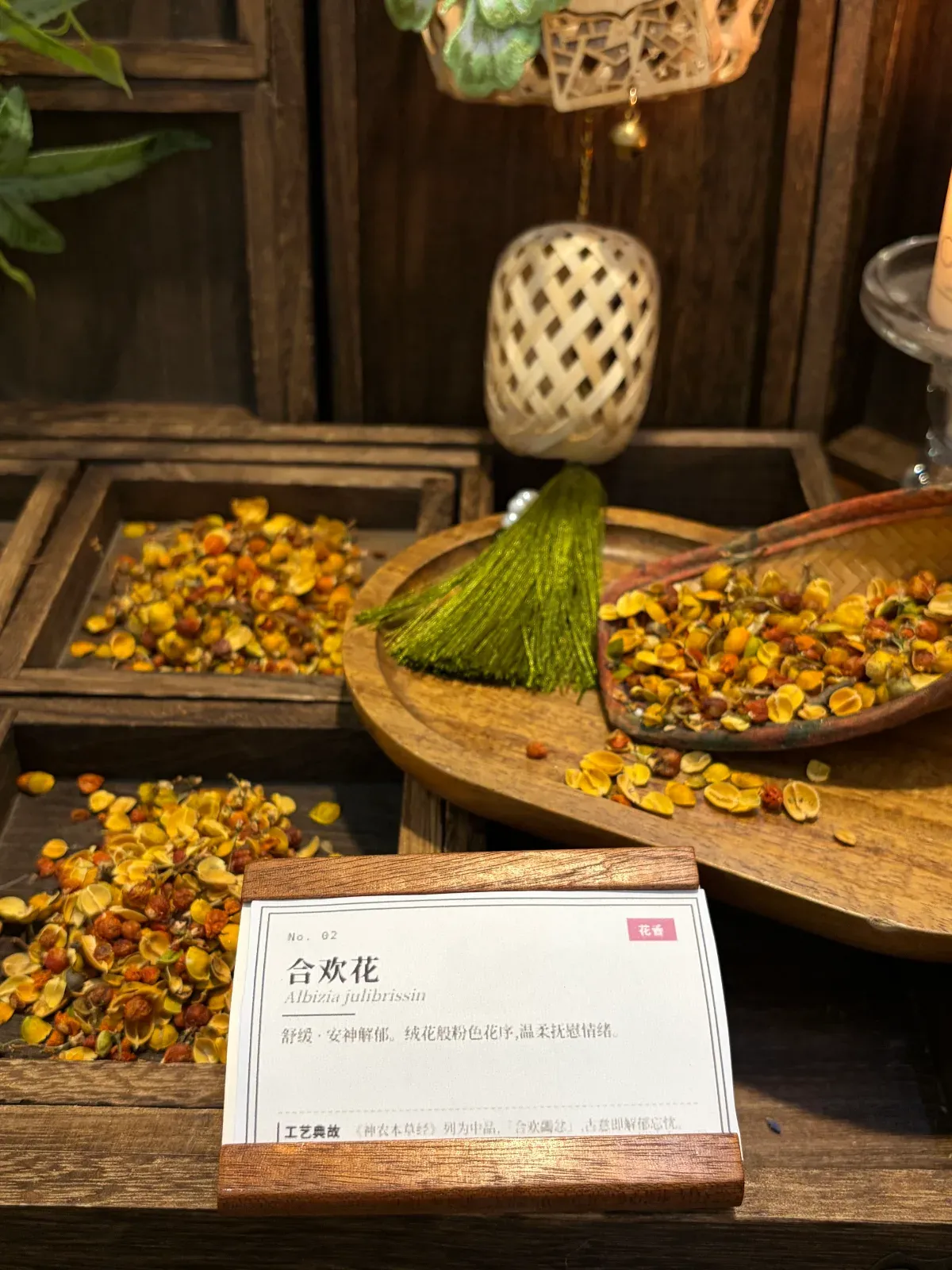
Albizia Flower Dried Herb is the dried blossom of Albizia julibrissin, a tree grown along China's Yangtze River basin. The flowers are not petals in the usual sense. They are fine, silk-like filaments that give the tree its English nickname, the silk tree, and its soft, powdery texture once dried.
In Chinese, the tree is known as he huan, a name that reads as collective joy or shared happiness. That name has followed the plant for centuries and appears in classical herbal records such as the Compendium of Materia Medica (1596), where albizia is listed among plants associated with quiet evenings.
What you receive is a natural plant product. There is no added fragrance, no dye, and no blending with other botanicals. The colour and scent shift from batch to batch because the harvest does.
How Albizia Flower Smells and Why the Aroma Matters
The scent is faintly sweet and slightly powdery, closer to a soft floral linen than to a heavy perfume. It does not announce itself from across a room. Instead, it sits quietly near whatever it is placed beside: a pillow, a folded sweater, a stack of books.
That restraint is exactly why it works in aromatic crafts. A strong fragrance can become tiring in a bedroom. A gentle one can stay for weeks without feeling heavy. Albizia flower is the second kind, and it blends well with lavender, dried citrus peel, and mugwort when you want a more layered home aroma.
Traditional Records and Cultural Meaning of He Huan
Classical Chinese texts record albizia as a soothing botanical used in quiet, evening-oriented practices. It was traditionally used for calm surroundings and often placed in small cloth pouches kept near bedding or a reading seat.
The cultural meaning is carried in the name itself. He huan suggests harmony and shared joy, and the flower's thread-like form has long been read as a symbol of things that hold together softly rather than tightly. For buyers outside China, that idea translates easily: a small object that makes a corner of a home feel calmer.