
Cygnus Constellation: Brightest Star, Shape, and Star Charts
Explore the Cygnus constellation: its brightest star Deneb, how to find its cross shape, and its role in star charts. Learn observing tips and discover how a Vivfora star map captures the sky above any moment.
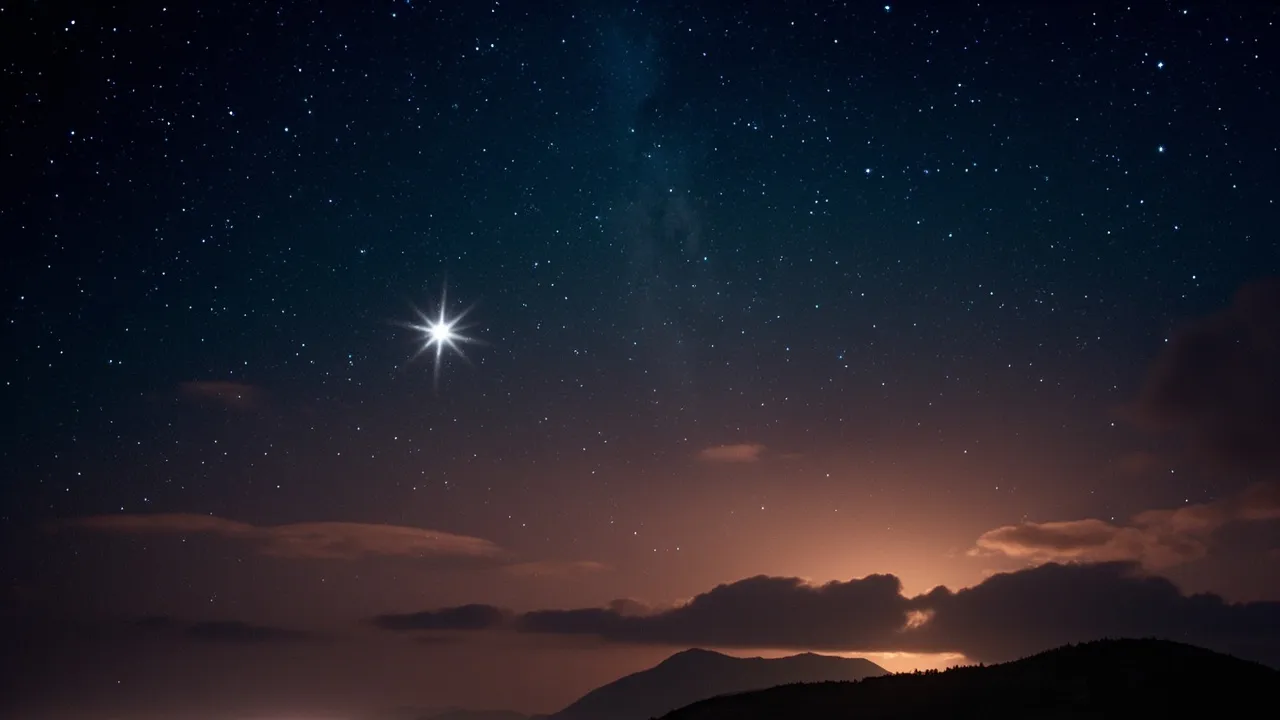
The Brightest Star of Cygnus: Deneb
Cygnus, the Swan, is a prominent constellation in the northern sky. Its brightest star, Deneb (Alpha Cygni), shines at magnitude 1.25, making it one of the most luminous stars visible to the naked eye. Deneb is a blue-white supergiant located about 2,600 light-years away. It marks the tail of the swan and forms one corner of the Summer Triangle, along with Vega and Altair.
Deneb's high luminosity—roughly 200,000 times that of the Sun—makes it a key reference point for astronomers. Despite its distance, it remains easily visible even from moderately light-polluted areas.
How to Find the Shape of Cygnus in the Night Sky
Cygnus is best known for its distinctive cross shape, often called the Northern Cross. To locate it:
- Look for the Summer Triangle: During summer and early autumn in the Northern Hemisphere, find the bright stars Vega (in Lyra) and Altair (in Aquila). Deneb completes the triangle.
- Trace the cross: From Deneb, follow the line of stars that form the swan's body. The cross extends along the Milky Way, with Deneb at the top and Albireo at the bottom.
- Use the Milky Way as a guide: Cygnus lies along the rich band of the Milky Way, making it a stunning sight in dark skies.
The swan's wings stretch out from the central axis, with bright stars like Sadr (Gamma Cygni) at the intersection. Albireo, at the swan's head, is a famous double star with contrasting gold and blue colors—a delight for small telescopes.
Cygnus in Star Charts and Astronomy
Cygnus is one of the 48 constellations listed by Ptolemy and remains one of the 88 modern constellations. It covers a large area of 804 square degrees, ranking 16th in size. In star charts, Cygnus is depicted as a swan flying along the Milky Way, with its wings spread wide.
The constellation is home to several notable deep-sky objects:
- The North America Nebula (NGC 7000): A large emission nebula resembling the continent.
- The Veil Nebula (NGC 6960, 6992): A supernova remnant with delicate filaments.
- Cygnus X-1: A famous black hole candidate.
These objects make Cygnus a favorite target for astrophotographers and amateur astronomers.
Using a Vivfora Star Map to Locate Cygnus
A star map is an invaluable tool for finding constellations like Cygnus. Vivfora offers a personalized star map that charts the real sky above any chosen moment—whether it's a birthday, anniversary, or any special date. By inputting the date, time, and location, you receive a precise map showing the positions of stars and constellations, including Cygnus, as they appeared at that exact moment.