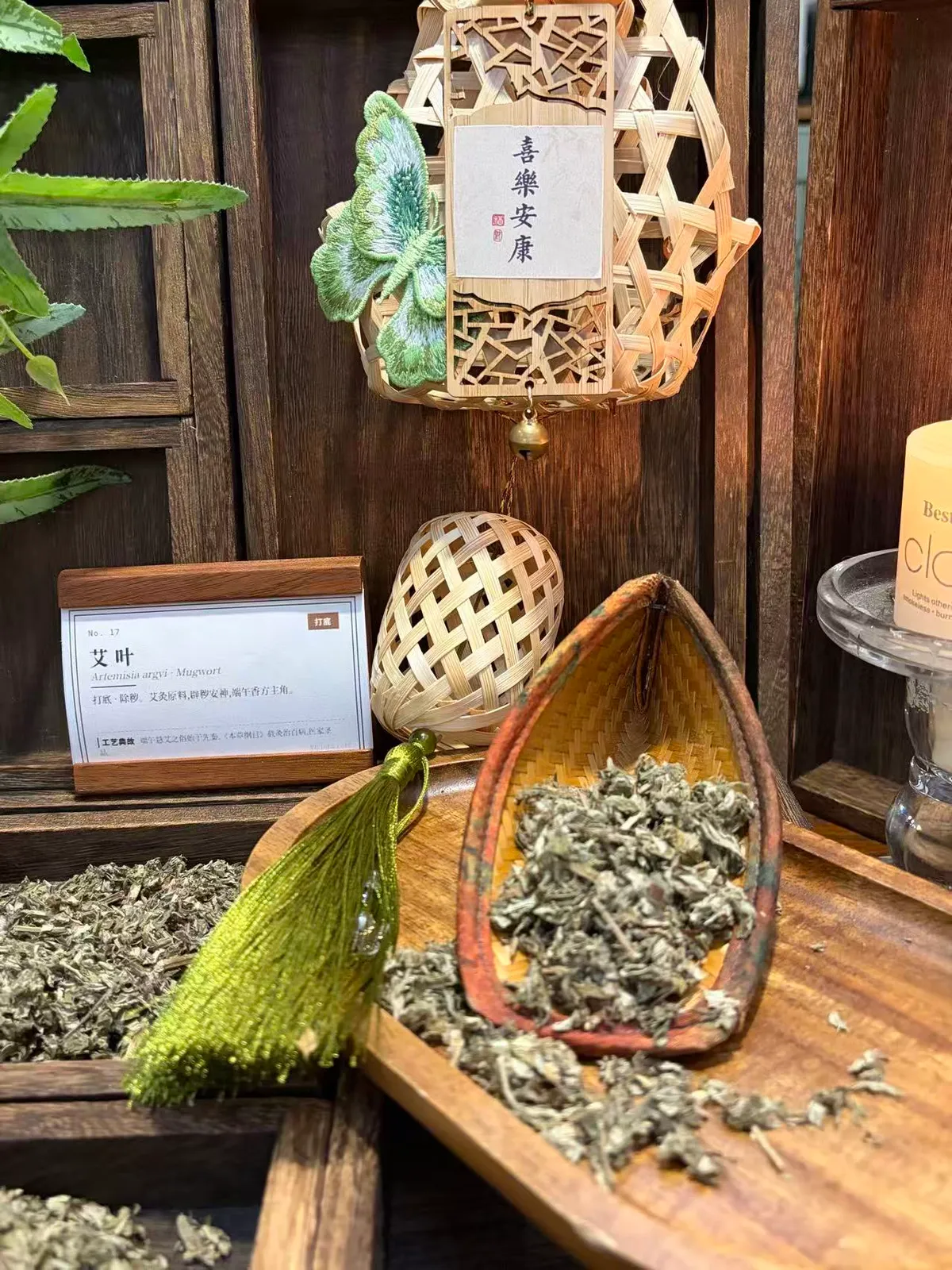
Mugwort (Artemisia argyi): The Aromatic Herb Behind Dragon Boat Festival Sachets
Mugwort (Artemisia argyi) is the grey-green herb hung at Dragon Boat Festival doors and tucked into sachets. Here is how it is recorded, burned, stored, and used safely at home.
What Is Mugwort? A Botanical Portrait
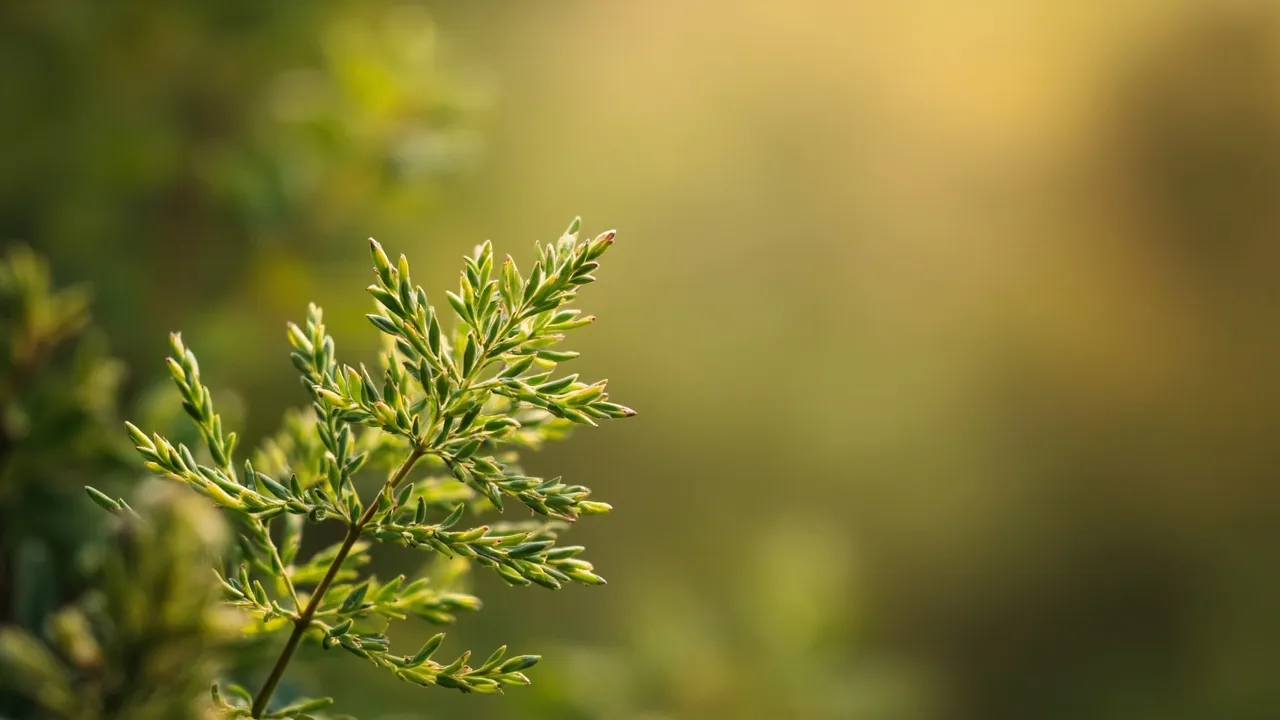
Mugwort - Artemisia argyi, known in Chinese as ai cao - is a perennial herb in the daisy family, Asteraceae. It grows widely across China, often along field edges, riverbanks, and hillsides where the soil stays open and sunny. Gardeners recognize it by its deeply lobed leaves: dark green on top, soft grey-white and densely fuzzy underneath, a texture that catches light and holds it.
Rub a dried leaf between your fingers and the aroma arrives immediately - warm, green, slightly bitter, with a faint smoky edge. That scent is the reason the plant has stayed in Chinese daily life for so long. It is not a sweet or perfumed smell; it is a clean, grounding one, closer to a walk through a summer field than to a bottle of fragrance.
The plant is harvested in summer before it flowers, when the leaves are thick and the underside fuzz is dense. Growers cut the stems, dry the leaves in sun or shade, then strip away the coarse stems so the whole leaves remain intact. That care matters: broken, dusty leaf material loses its aroma far faster than whole leaves.
Mugwort in Chinese Records and Poetry
Mugwort appears in the Compendium of Materia Medica (Ben Cao Gang Mu, 1596), in the section on herbs, where it is catalogued among the plants that shaped everyday household practice. It also lives in Chinese poetry and seasonal writing, usually tied to early summer and to the customs of the fifth lunar month.
What the records describe is a plant woven into ordinary life rather than reserved for specialists. It was gathered by families, dried in bundles, and kept through the year. In the traditional Chinese view, the herb belonged to the same category as other aromatic plants - valued for how it smelled, how it burned, and how it marked the turning of the season.
A Note on How We Describe It
Older texts describe mugwort through the language of their time. In this article we use the modern, careful phrasing: mugwort is traditionally used for seasonal household rituals, and its aroma is enjoyed for ambiance. We do not make medical claims, and the product discussed here is sold as an aromatic herb, not as food or medicine.
The Duanwu Connection: Hanging, Burning, and Wearing
The strongest cultural thread around mugwort is Duanwu, the Dragon Boat Festival, which falls on the fifth day of the fifth lunar month. In many regions of China, households hang bundles of mugwort and other aromatic plants at the door. The gesture is a centuries-old practice of marking the season and wishing for well-being - cleansing in the symbolic sense, a fresh start for the household as summer heat arrives.