Mugwort (Artemisia argyi): Heritage Uses, Sachets & Safety Notes
An encyclopedia-style guide to mugwort (Artemisia argyi): its recorded heritage uses, the Dragon Boat Festival sachet tradition, how it works as a warm green note in modern aromatherapy, and the allergen and safety notes you should know before buying.

What Is Mugwort? A Botanical Portrait
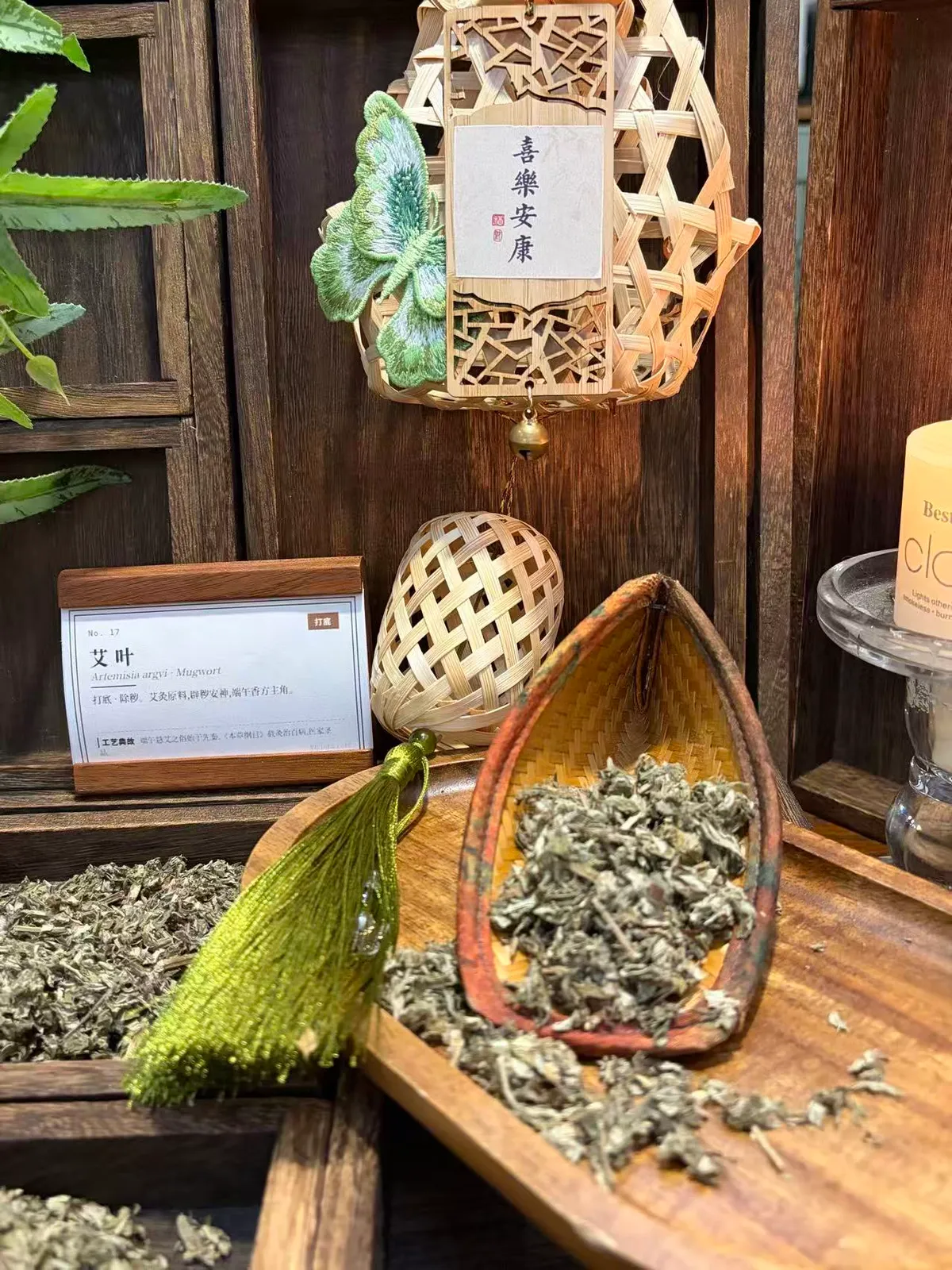
Mugwort, known to botanists as Artemisia argyi, is a perennial plant in the Asteraceae family — the same broad plant family as daisies, chrysanthemums, and ragweed. It grows as a leafy, silvery-green herb with deeply lobed leaves and a distinctive aroma that sits somewhere between fresh-cut grass and warm woodsmoke.
In East Asia the plant has been gathered, dried, and bundled for centuries. It is not a rare or exotic specimen; it is a common roadside herb that became culturally important precisely because it was so widely available. That everyday quality is part of its charm. A plant that grows near the door is a plant that ends up in the doorway.
Mugwort in the Historical Record
Mugwort appears in classical Chinese materia medica, most famously in the Compendium of Materia Medica (本草纲目, 1596), in the section on herbs. The compiled text records a long list of traditional applications attributed to earlier authors. Among the recorded entries: it was "traditionally used for" moxibustion practice, prepared as a decoction, and noted in relation to a wide range of traditional concerns — from bleeding and digestive complaints to women's health and the dispersal of cold and damp.
Later compilers summarized its character as warming the middle, expelling cold, and removing dampness. These are historical descriptions of a traditional practice, not medical claims. What matters for a modern reader is the cultural weight: this was a plant that generations of practitioners wrote about, argued over, and used.
A Herb of Many Names
Across East Asia, mugwort carries regional names and regional customs. The thread connecting them is consistent: a strongly aromatic leaf, harvested in spring, dried for later use, and valued for its scent as much as anything else.
The Dragon Boat Festival and the Sachet Tradition
Mugwort is one of the plants behind the Dragon Boat Festival custom of hanging bundles at the door. In late spring, households would gather fresh mugwort and other aromatic plants, tie them together, and suspend them above entrances — a seasonal gesture tied to the turning of the year.
The same herb became a classic filling for sachets worn in late spring. Small cloth pouches, stuffed with dried aromatic leaves, were worn on the body or hung in rooms. The logic was sensory and symbolic at once: a clean, green, slightly smoky scent that marked the season, and a small object that carried the meaning of the festival into daily life.