Honeysuckle Flower (Jinyinhua): Aroma, Tradition & Sachet Uses
Honeysuckle flower (jinyinhua) is a traditional Chinese floral material from Shandong and Henan. Explore its light honeyed aroma, recorded uses, harvest craft, sachet applications, and safety notes.
What Is Honeysuckle Flower? The Gold-Silver Bloom
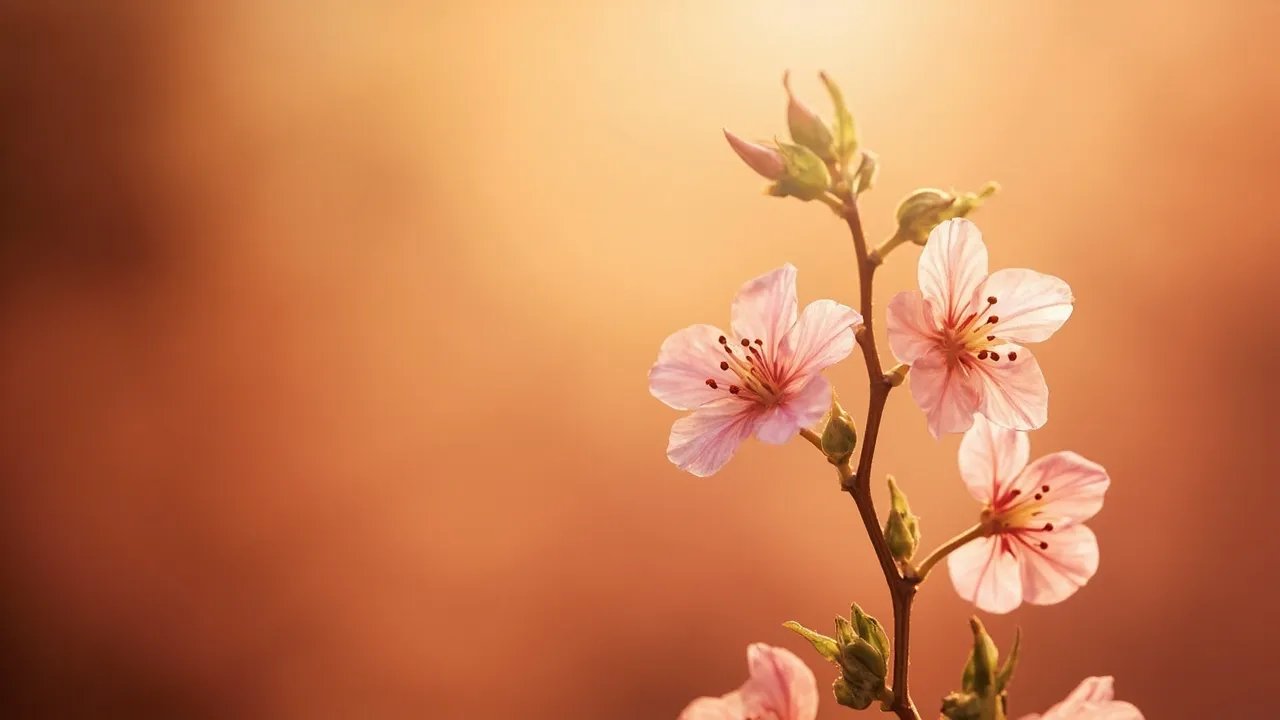
Honeysuckle flower, known in Chinese as jinyinhua, is the dried bud of Lonicera japonica, a climbing vine that has grown in Chinese gardens and hedgerows for centuries. The name jinyinhua means "gold-silver flower," and the reason is easy to see: each slender bud opens white in the evening, then shifts to gold by the following day, so a single vine can carry both colors at once.
The material sold for sachets and tea comes mainly from Shandong and Henan provinces, where the buds are gathered in quantity each spring and early summer. What arrives in your hands is modest — a small pouch of pale, curved buds — but it carries a long story of harvest timing, patient drying, and hand sorting.
This article covers what the flower is, how it smells, how it has been recorded in Chinese tradition, how it is processed, and how to use it well in a modern home.
The Aroma: Light, Clean, and Quietly Honeyed
Honeysuckle is not a heavy scent. If you are used to resinous incense or deep floral absolutes, the first impression may be surprisingly airy.
- Top note: a fresh, green-floral sweetness, close to the smell of a garden after rain
- Heart: a soft honeyed quality, which is where the English name "honeysuckle" comes from
- Dry-down: a faint, clean hay-like warmth that lingers in fabric
Because the scent is gentle rather than assertive, dried honeysuckle buds work well where a strong fragrance would be unwelcome: a linen drawer, a bedside pillow, a small entryway, a car console. In aromatherapy blending language, dried flowers like this add a light, honeyed floral note to summer blends, and they pair naturally with chrysanthemum, goji berry, or a touch of citrus peel.
Traditionally Recorded Uses and Cultural Meaning
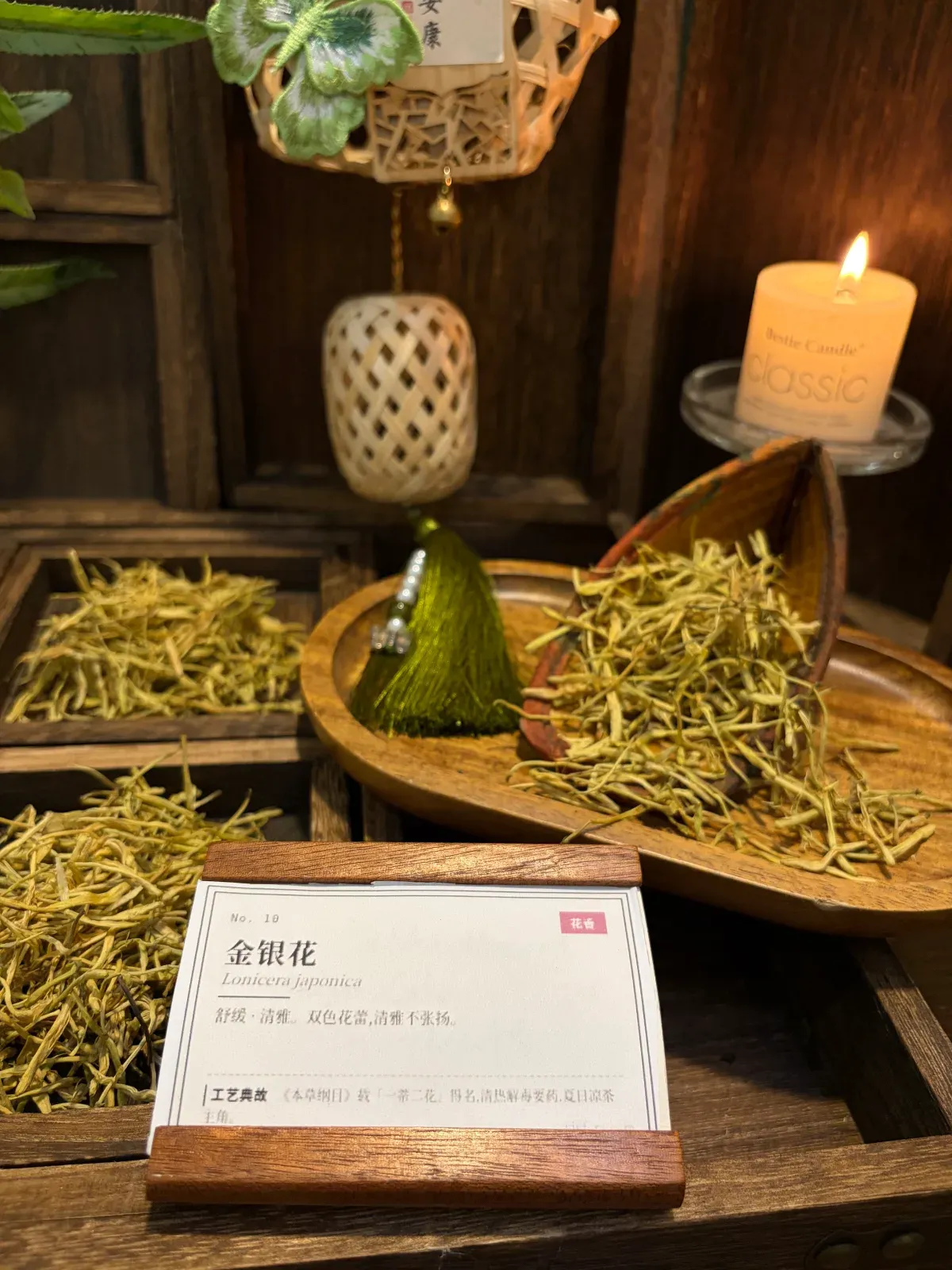
The flower appears in the Compendium of Materia Medica (1596), in the section on herbs, where it is listed under its classical name rendong — "winter-enduring." That name comes from the vine itself: it keeps its leaves through frost, and it is this resilience, rather than the bloom, that Chinese tradition first noticed.
In that recorded tradition, honeysuckle flower was traditionally used for cooling summer drinks and was a common ingredient in everyday herbal pairings. It also carried a symbolic weight — quiet elegance that survives a hard season. A plant that stays green through winter and then produces white-and-gold flowers in warm weather became a small emblem of endurance and unshowy beauty.
It is worth being precise here: this is a long-recorded cultural and culinary tradition, not a medical claim. Honeysuckle is a plant material with a history of household use, and it is best appreciated in that frame — as part of a calming ritual, not as a substitute for professional care.
How Dried Honeysuckle Buds Are Harvested and Prepared
The quality difference between a good batch and a mediocre one is almost entirely in the handling.
Picking before the bud opens
Buds are typically picked in the early morning, before they open. A closed bud holds its fragrance and its shape; once the flower opens fully, the petals bruise easily and the scent fades faster.
Drying to preserve shape and fragrance
After picking, the buds are air-dried or dried at low temperature. High heat would speed things up but would also flatten the aroma and turn the buds brittle and brown. Low, slow drying keeps the pale green-gold color and the clean floral note intact.
More What is Honeysuckle Flower? Traditional uses, aroma and mode to Explore
Readers who enjoyed this guide usually continue with What is Honeysuckle Flower? Traditional uses, aroma and mode products and related heritage pieces:
- Honeysuckle Flower (Jinyinhua): Aroma, Tradition & Sachet Uses — the exact product featured in this article
- Herbal sachet collection — hand-tied aromatic pouches, ready to ship
- All Chinese heritage crafts and wellness goods — browse the full catalogue
Sources & further reading
- Compendium of Materia Medica (Ben Cao Gang Mu, 1596, Li Shizhen), Herbs VII — classical entry on Honeysuckle Flower (Lonicera japonica).
Classical references describe historical and cultural practice; they are not modern clinical evidence.