
Perseus Constellation: Brightest Star, Shape, and Star Charts
Discover the Perseus constellation: its brightest star Mirfak, how to find its shape, and its role in star charts. A factual guide for stargazers and astronomy lovers.
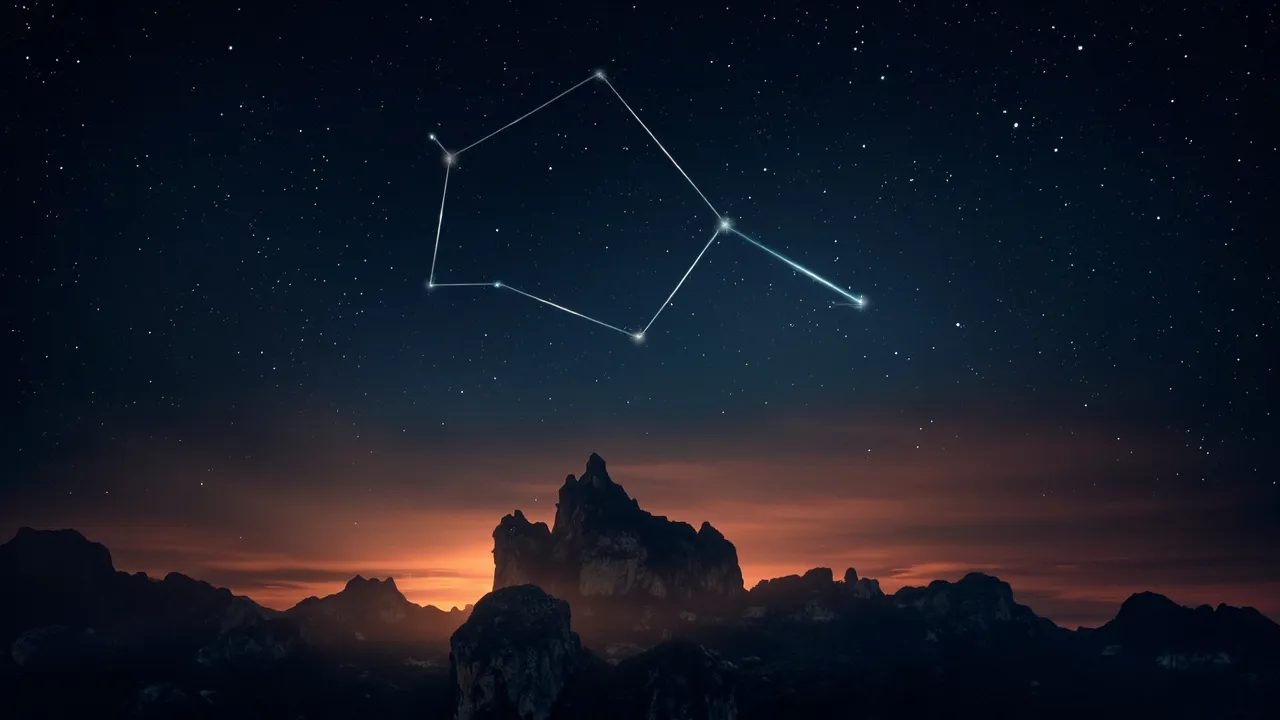
What Is the Perseus Constellation?
Perseus is a prominent constellation in the northern celestial hemisphere, named after the Greek hero Perseus. It is one of the 48 constellations listed by the 2nd-century astronomer Ptolemy and remains one of the 88 modern constellations recognized by the International Astronomical Union. Located between Cassiopeia and Andromeda, Perseus is rich in deep-sky objects and is associated with the annual Perseid meteor shower.
The Brightest Star: Mirfak
Mirfak (also known as Alpha Persei) is the brightest star in Perseus, with an apparent magnitude of about 1.8. It is a yellow-white supergiant located roughly 510 light-years from Earth. Mirfak is the central star of the Alpha Persei Cluster, a loose open cluster that is easily visible with binoculars. In star charts, Mirfak is often labeled as α Per.
How to Find Perseus in the Night Sky
Perseus is visible from most northern latitudes and can be spotted during autumn and winter evenings. Here are two reliable methods to locate it:
Using Cassiopeia as a Guide
Cassiopeia, the distinctive W-shaped constellation, lies to the north of Perseus. Draw a line from the two stars on the eastern side of the W and extend it southward; you will arrive at Mirfak.
The Great Square of Pegasus
The Great Square of Pegasus is a large asterism in the autumn sky. From the northeastern corner of the square, follow a line toward Cassiopeia, and you will pass through the constellation of Andromeda before reaching Perseus.
The Shape of Perseus: A Hero in the Stars
Perseus is often depicted as a hero holding the severed head of Medusa. The constellation's main stars form a rough stick figure: Mirfak as the torso, with Algol (Beta Persei) marking the head of Medusa. Algol is a famous eclipsing binary star that dims from magnitude 2.1 to 3.4 every 2.87 days. The constellation also includes a Y-shaped pattern of stars that represents the hero's legs and arms.
Perseus in Star Charts and Astronomy
Perseus is included in all major star charts and planispheres. It is home to several notable deep-sky objects, including the Double Cluster (NGC 869 and NGC 884), a pair of open clusters visible to the naked eye under dark skies. The constellation is also the radiant point of the Perseid meteor shower, which peaks in mid-August. Star charts often show Perseus adjacent to Andromeda, Cassiopeia, and Taurus.