What Happens to Water in a Pure Silver Pot?
What Happens to Water in a Pure Silver Pot? Pour water into a hand-forged 999 fine silver teapot and, for a while, almost nothing visible happens. No colour change, no smell, no taste you would notice in a blind test. An…
<h2>What Happens to Water in a Pure Silver Pot?
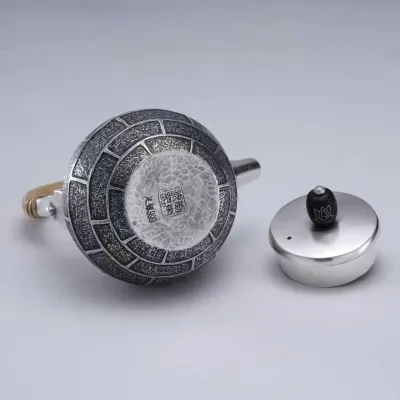
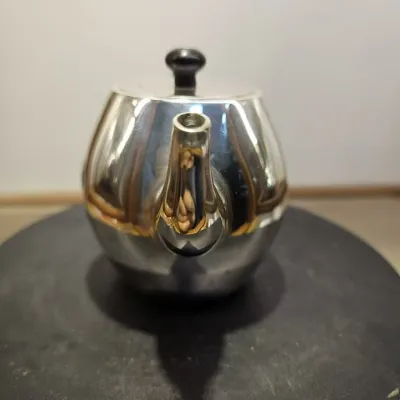
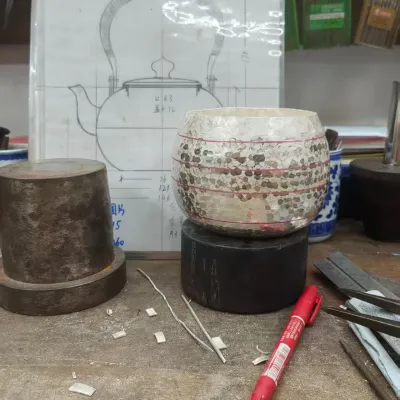
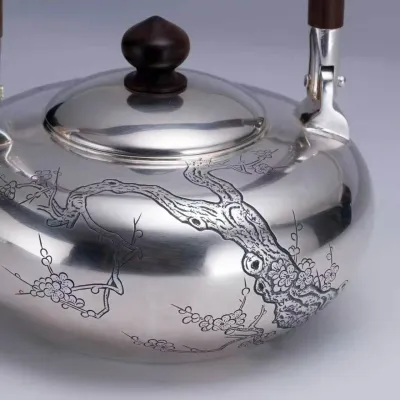
Pour water into a hand-forged 999 fine silver teapot and, for a while, almost nothing visible happens. No colour change, no smell, no taste you would notice in a blind test. And yet the water is not in the same chemical situation it was in a glass jug.
Here is what actually happens — separated into what is well documented, what is traditional practice, and what is often claimed but not established.
#### 1. Silver releases a very small number of ions
Silver is one of the few metals whose antimicrobial behaviour is documented in laboratory conditions. In the presence of water and dissolved oxygen, metallic silver can release <strong>silver ions (Ag⁺)</strong> in trace amounts:
<code>4 Ag + O₂ + 2 H₂O → 4 Ag⁺ + 4 OH⁻</code>
In a silver vessel the quantity is extremely small — measured in parts per billion for still water over a short period. It is not a coating, not a chemical added to the water, and not something you can see. It is simply a slow, surface-level exchange between the metal and the water touching it.
This is why "silver water" is a real term in materials literature rather than a marketing invention. It is also why <strong>purity matters</strong>: 999 fine silver is essentially silver, whereas plated or alloyed vessels introduce other metals into that same exchange.
#### 2. The water does not "become silver"
The commonest misunderstanding is that water in a silver pot turns into something else. It does not. Water stays water — H₂O with whatever minerals it already carried. What changes is the presence of trace silver ions, and that change is small enough that most people cannot detect it by taste.
If your water tastes different after sitting in silver, the likelier causes are the vessel's interior finish, temperature, and how long the water sat — not a transformation of the water itself.
#### 3. Temperature changes the picture, but not the way people assume
Heat accelerates most chemical exchanges, including this one. Hot water in a silver pot will pick up ions somewhat faster than cold water. It will also cool, and it will lose dissolved gases that affect mouthfeel.
In practice, this is why silver teapots have been used for <strong>hot tea and hot water service</strong> rather than as a way to treat cold drinking water. The tradition is about the vessel's thermal behaviour and its inertness — silver does not impart the metallic notes that reactive metals can.
#### 4. What silver does not do
It is worth being precise, because this is where most online claims go wrong:
- <strong>It does not sterilise water.</strong> Trace silver ions are not a water-treatment system. Do not treat a silver pot as a substitute for boiling, filtering, or any actual purification method.