
Intangible Cultural Heritage Jewelry: A Buyer's Guide to Craft, Care & Checking
A factual guide to intangible cultural heritage jewelry: what the term means, how craft shows up in materials and daily wear, how to choose, and what to check before ordering.

What 'Intangible Cultural Heritage' Means in Jewelry
In China, intangible cultural heritage (ICH) refers to living practices — skills, techniques, and knowledge passed between people — rather than to objects or buildings. When a jewelry listing mentions ICH, it is usually pointing to a named craft technique and a named practitioner who carries it forward.
That distinction matters for buyers. A heritage claim is not a gemstone grade or a metal hallmark. It describes how something is made and who is responsible for the technique. It should be verifiable in the listing: a technique name, a person's role, and a clear description of which parts of the piece are hand-worked.
How Heritage Craft Shows Up in Materials and Daily Wear
Heritage technique rarely means exotic materials. More often it means ordinary, well-understood materials handled with discipline — silver, gold, copper, stone — where the value sits in proportion, setting, and finish.
- Metal purity is stated plainly. S925 means 92.5% silver. Rhodium plating is a finish over the silver, not a permanent coating, and re-plating over time is normal care.
- Stones are named accurately. Lab-grown moissanite is not diamond; a good listing says so directly rather than implying otherwise.
- Construction is described. Low-set heads and slim bands sit close to the finger, which matters for daily wear — they catch less on clothing and feel less top-heavy.
- Finish is by hand. Bench polishing and pre-dispatch checks are the parts a buyer cannot see in a photo but can feel in the edges and seats.
A practical example: a narrow band with a low head is easier to wear under gloves or at a desk than a tall solitaire, because the stone rests just above the hand rather than standing up. That is a design decision, not a heritage one — but heritage-trained bench work is often where such proportions are resolved.
How to Choose a Heritage-Informed Piece
Start with wear, not with story. Ask where and how often you will wear it, then check whether the construction suits that.
- For everyday wear: lower settings, smooth shanks, and finishes that tolerate wiping.
- For occasional wear: taller settings and pavé lines are fine, but store them separately to avoid abrasion.
- For gifting: confirm sizing availability before ordering, since made-to-order pieces may not be quickly resizable.
- For metal sensitivity: plating over silver can wear at high-friction points; ask how re-plating is handled.
If a listing leans heavily on heritage language but gives no technique name, no maker role, and no material specifics, consider the story as marketing rather than information.
What to Check Before You Order
- Metal and finish: is it solid, plated, or vermeil? Plated finishes need periodic care.
- Stone identity: lab-grown or natural, and which species.
- Sizing: which sizes are offered, and whether exchanges are possible on made-to-order items.
- Lead time: made-to-order pieces are dispatched after production, not from stock.
- Care instructions: cloth, pouch, and what to keep the piece away from.
- Returns and tracking: confirm both before payment.
A Closer Look: The Evenline White Round Moissanite Ring
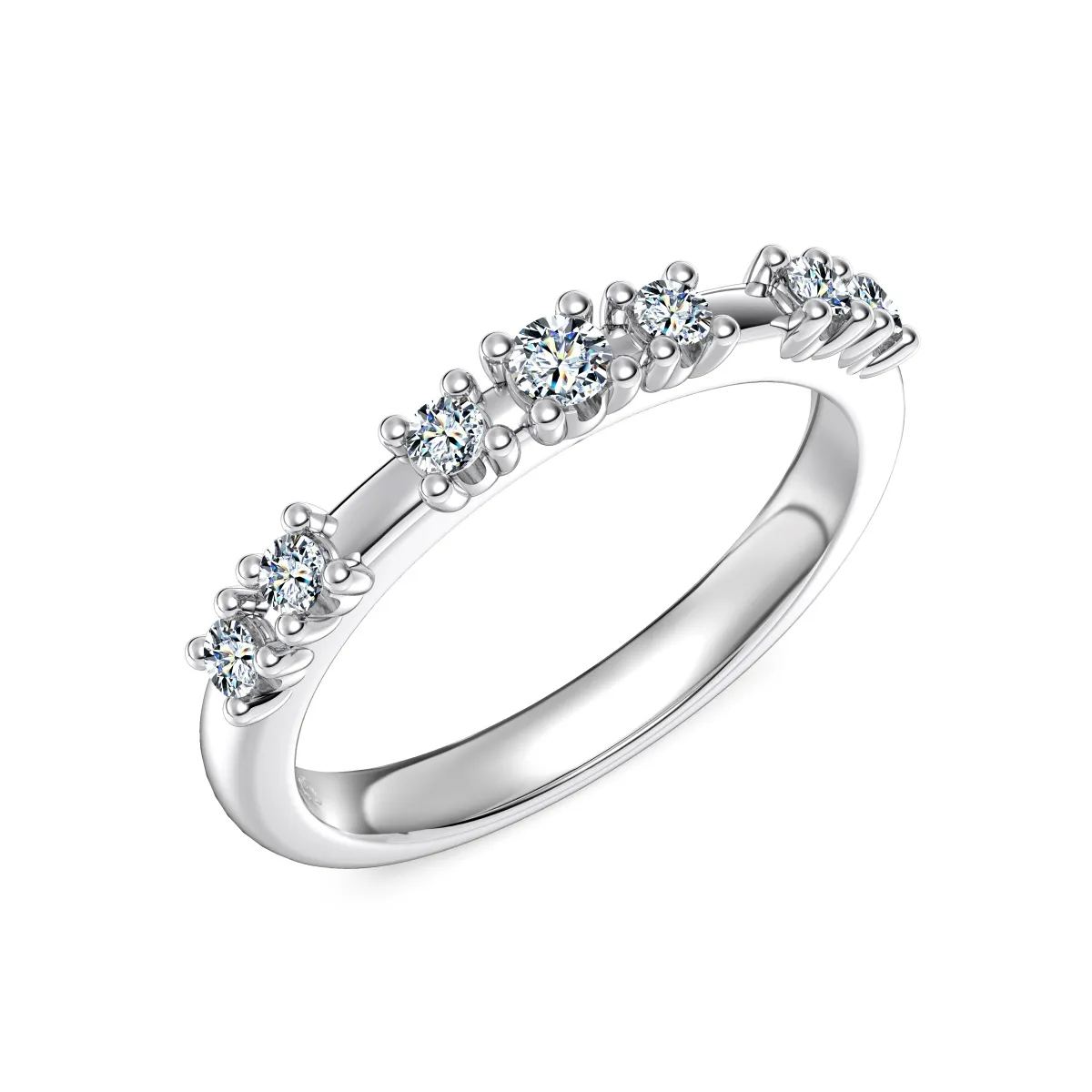
The Evenline ring is a useful case study because its listing is specific. A round brilliant white moissanite sits in a plain, low-set head; the band is kept narrow and even; a short run of pavé accents carries light along each shoulder without competing with the centre.
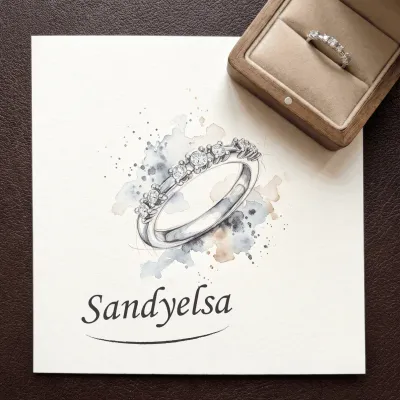
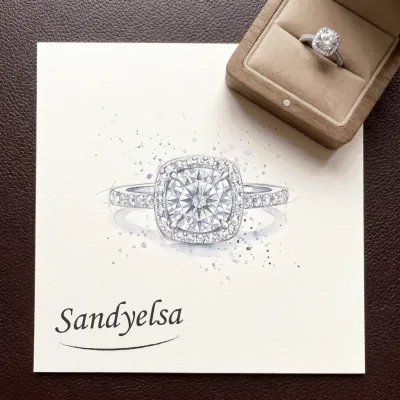
The metal is S925 sterling silver with rhodium plating — a plated finish over silver, not solid gold. Sizes run 5#US to 9#US. The piece is designed by Sandyelsa with technical direction from Master Wei Dong, described as an inheritor of China's intangible cultural heritage in traditional metal forging and a tenth-generation bearer of the Tang-dynasty gonggong hammering technique. That is the heritage link: a named technique and a named practitioner, attached to bench-finished work rather than to a claim about the stone.
VF-RNG-OF0F7 — Evenline White Round Moissanite Ring — $48.99. A low-set round moissanite on a slim rhodium-plated silver band, hand-polished at the bench.
More Intangible Cultural Heritage: a factual buyer's guide for je to Explore
Readers who enjoyed this guide usually continue with Intangible Cultural Heritage: a factual buyer's guide for je products and related heritage pieces:
- Intangible Cultural Heritage Jewelry: A Buyer's Guide to Craft, Care & Checking — the exact product featured in this article
- Herbal sachet collection — hand-tied aromatic pouches, ready to ship
- — browse the full catalogue